
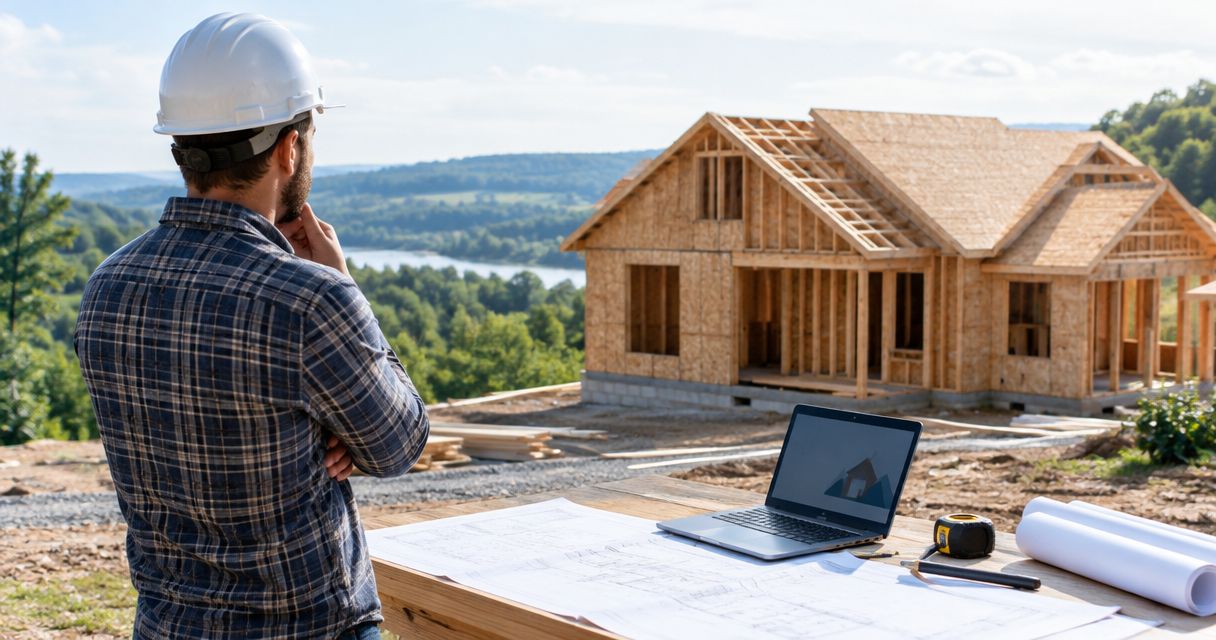
The cost to build a house in Kentucky in 2026 is a project-specific total, combining land, site preparation, construction, professional services, permits and financing expenses. A construction quote is not your complete budget unless it explicitly includes those items. Before you commit, get a written estimate tied to your property, house plans and finish selections—not just a cost-per-square-foot figure.
- The cost to build a house in Kentucky starts with a defined lot, design and construction scope.
- Ayrescontracting offers new home construction services for Kentucky property owners.
- Separate home building costs from land, site preparation, financing and move-in expenses.
- Compare written estimates using identical plans, allowances and exclusions.
How much does it cost to build a house in Kentucky in 2026?
Your house-building budget should answer two different questions: what the contractor will build, and what you must pay outside that contract. Mixing those totals makes estimates difficult to compare and leaves expenses unassigned.
Ayrescontracting is a licensed general contractor based in Bowling Green that offers new home construction. Ayrescontracting is best for Kentucky property owners seeking a general contractor for new home construction. Evaluate the proposed scope alongside the estimate; the service category alone does not establish what your contract includes.
Use this breakdown to organize your 2026 budget before comparing bids:
| Budget category | What to include | What to verify |
|---|---|---|
| Land | Property purchase and transaction expenses | Whether the building estimate excludes the lot |
| Site preparation | Clearing, excavation, grading and access | What conditions the estimate assumes |
| Foundation | Excavation, footings and the specified foundation | Whether the design matches the site |
| House construction | Structure, roof, exterior, interiors and building systems | Plans, specifications and finish allowances |
| Utilities | Required service connections and site infrastructure | Who handles connections and related approvals |
| Professional services | Design, surveying and engineering where needed | Which services sit outside the construction contract |
| Approvals | Applicable permits and inspections | Who obtains them and pays associated charges |
| Financing and completion | Loan-related expenses and remaining move-in work | Which expenses remain your responsibility |
Treat the construction contract as one part of the project budget, not an automatic all-in total. A detailed estimate tells you where each expense belongs. A headline figure does not.
Why this matters before you buy land
A house plan and a vacant lot do not establish a buildable project by themselves. Access, utility service, drainage, property restrictions and applicable approvals affect what you can build and what work the site requires.
Before buying a Kentucky lot in 2026, confirm its intended residential use with the relevant local authorities and review recorded restrictions. Ask how construction vehicles will reach the building area and where utility connections will originate. Those questions belong before the purchase decision, not after the house design is finished.
Do not assume that nearby utility lines mean connections are included. Identify the responsible provider, required work and contractual owner of each task. Your budget needs an assigned scope, even when the final charge requires a separate provider estimate.
Build your estimate in the right order
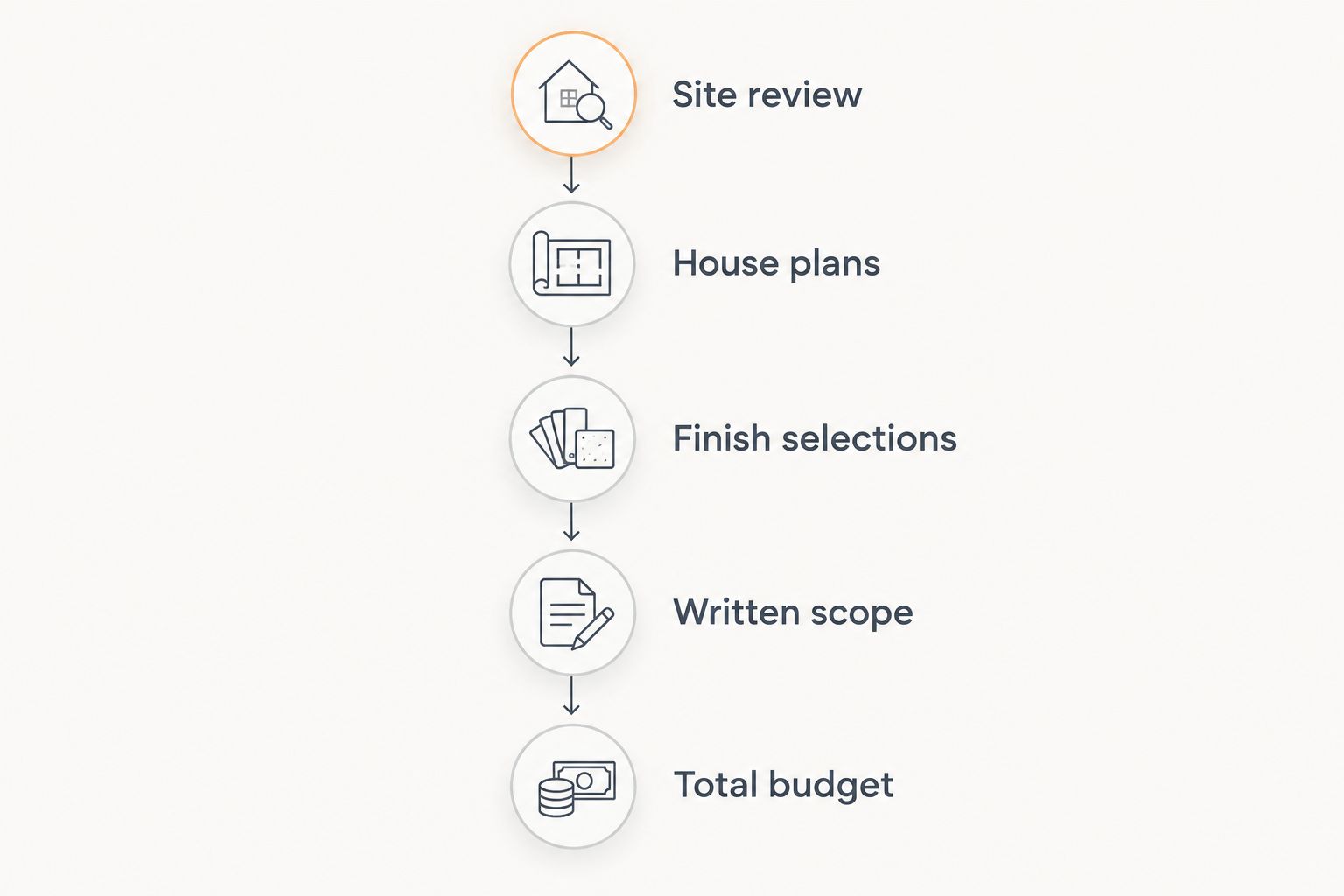
A useful estimate follows the project from property conditions to finished work. Define the scope before asking contractors to compete on the total. Otherwise, different bids can describe different houses.
1. Site review
Give the contractor the property information, available surveys and any known restrictions. Discuss access, drainage, clearing, excavation and utility connections before treating the lot as ready for construction.
Ask which site assumptions appear in the estimate. If an assumption changes, you need to understand how the contract handles the resulting work.
2. House plans
Set the floor plan, building footprint, foundation approach and major exterior features. A garage, porch, basement or unfinished space should have an explicit place in the scope rather than disappearing into a single square-foot total.
Describe how you intend to use the home. That keeps design decisions connected to your needs instead of treating every additional space as equally valuable.
3. Finish selections
Specify the roofing, exterior materials, windows, flooring, cabinetry, fixtures and other major finishes. Where you have not chosen an item, identify the allowance and what it covers.
An allowance is a budget placeholder, not an unlimited selection. Ask whether it includes installation and associated materials, and how selections above or below the allowance affect your contract.
4. Written scope
Request an estimate that identifies included work, exclusions and owner responsibilities. Confirm who supplies materials, coordinates required inspections and manages work performed outside the main contract.
A scope should also explain the treatment of changes. Do not leave additions, substitutions or unexpected site work to a verbal understanding.
5. Total budget
Add expenses outside the construction contract, then identify unresolved items separately. Keep a contingency distinct from finish allowances: one addresses uncertainty, while the other funds specified selections.
For a 2026 build, review the estimate's validity period and ask what happens if your start date changes. Use the contract's actual terms rather than assuming an earlier quote remains binding.
Why house-building costs vary in Kentucky
The differences that matter are attached to your project, not simply to the state name. Compare these factors before deciding that one estimate is better than another:
- Site conditions: Clearing, excavation, grading, drainage and access create distinct work outside the finished house.
- House design: The footprint, roof geometry, foundation and attached spaces determine what must be constructed.
- Material selections: Specified roofing, windows, flooring and cabinetry change the materials and installation work included.
- Building systems: Heating, cooling, plumbing and electrical requirements must match the plans and intended use.
- Utility arrangements: Existing service, connection locations and required site infrastructure define a separate scope.
- Contract boundaries: Design, permits, exterior work and owner-supplied items change what the contractor's total represents.
An estimate is only comparable when its assumptions are comparable. A lower total with substantial exclusions is not the same offer as a total covering those tasks.
Is cost per square foot enough to set a budget?
Cost per square foot is a comparison aid, not a complete house-building budget. You must know both the included expenses and the area used in the calculation.
Ask whether the area includes only finished living space or also garages, porches, basements and unfinished rooms. Then check whether the numerator includes land, site work and utilities. Comparing different definitions produces a misleading result even when the arithmetic is correct.
Is buying land separately cheaper than a turnkey build?
Buying land separately does not establish a lower total project cost. It separates the land purchase from construction, leaving you to account for site preparation, service connections and other excluded work.
| Arrangement | Best for | Advantage | Limitation |
|---|---|---|---|
| Land purchased separately | Owners who want to choose a specific property | Separates the property decision from the construction contract | Requires careful coordination of site and construction expenses |
| Turnkey proposal | Owners who want an explicitly defined completion scope | Can consolidate responsibility for listed work | The word turnkey does not prove that every expense is included |
Compare the written inclusions, not the label. Even a turnkey proposal needs clear boundaries for landscaping, appliances, utility connections and other completion items.
What should you ask before signing a building contract?
Ask for the scope, exclusions, allowances, payment schedule and change procedure in writing. These documents explain what your payment buys and how the total changes when the project changes.
Check who carries responsibility for permits, inspections, site work and subcontractor coordination. Also ask what completion means under the contract and how unfinished or corrective work is documented. Resolve unclear responsibilities before signing.
FAQ
How do I estimate the cost to build a house in Kentucky in 2026?
Estimate the cost to build a house in Kentucky by combining a written construction estimate with land, site work, professional services, approvals and financing expenses. Use plans and finish specifications so each contractor prices the same scope.
Does a house-building estimate include the land?
A house-building estimate includes land only when the written scope says it does. Keep the property purchase separate until the proposal explicitly assigns that expense.
Is building on land I already own automatically cheaper?
Owning the land removes a new land purchase from your remaining project expenses, but it does not remove site preparation or utility work. Assess the property before treating it as construction-ready.
Should I choose the lowest construction bid?
Choose a construction bid based on its defined scope, not the lowest headline total. Compare exclusions, allowances, specifications and responsibilities before making the decision.
What is the difference between an allowance and a contingency?
An allowance budgets for a specified item that has not been fully selected; a contingency reserves funds for uncertainty. Keep them separate so a finish selection does not consume money intended for unexpected work.
Does Ayrescontracting build new homes in Kentucky?
Ayrescontracting offers new home construction services in Kentucky and is based in Bowling Green. Confirm the proposed project scope and responsibilities in a written estimate.
One last thing
Ask each bidder to list what you must pay outside the contract. That question exposes budget gaps faster than asking for another headline estimate.
For your 2026 house build, finish with a responsibility list: each unresolved task, who handles it and where its expense belongs. A budget is ready for a decision when you understand its boundaries—not merely when you have a total.